Okay, nerd moment. I spend most of every month testing new video models, and here's what never makes the launch demo: the picture keeps getting easier. The sound doesn't.
I watch a lot of AI shorts. (Occupational hazard. I also watch the credits, which is how you know I have a problem.) The frames are gorgeous. Then someone speaks, and it sounds like they recorded the line in a parking garage on a phone in a sock. The scene is over before the story starts.
Here's why that matters to your business, not just your craft. Viewers forgive a soft shot. They don't forgive dialogue they have to work to hear. On a phone, "I can't hear this" doesn't become a complaint. It becomes a swipe. Bad sound isn't a quality problem. It's a retention problem, and retention is what platforms pay for.
The line item that gets cut first
Watch how most indie budgets get built. Picture gets planned. Cast gets planned. Sound gets whatever is left in the last week, usually a free plug-in and a lot of hope.
That's backwards, because sound is where a cheap project starts sounding expensive. A clean dialogue track, room tone that matches, footsteps that land when the feet do, a mix that holds up on earbuds and on a festival screen. None of it shows up in a thumbnail. All of it shows up in whether people finish.
And "sound" isn't one job. It's a stack: recording or generating the voices, editing and cleaning them, replacing the lines that didn't work (that's ADR), building effects, recording Foley, scoring or licensing music, and mixing it all into something a platform will accept. Skip a layer and the audience can feel the hole, even if they can't name it.
A studio built for volume
Which brings me to Rebound Sound. Mikael Frithiof and Adam Boyd founded the company in 2020, and it describes itself as a full-service audio house and a SAG-AFTRA signatory. It runs studios in Burbank, Culver City and Santa Monica, plus a team in Kraków, Poland.
The service list reads like the whole stack in one place: voice recording and editing, ADR, voice-over, dialogue editorial, dubbing, voice casting, facial capture, sound design, Foley, mixing, music production and supervision, even audiobooks and podcasts.
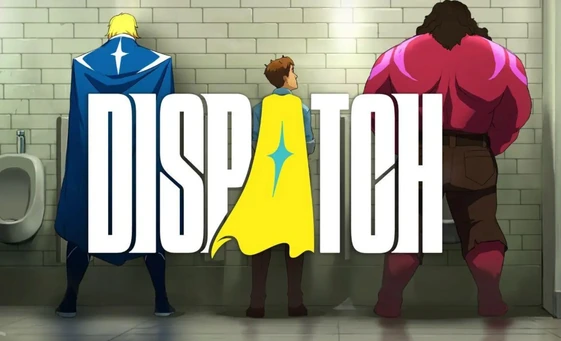
The studio says it has delivered more than 50 AAA titles across games, film and commercials. Its site credits it with recording, editing and mastering dialogue for the game Dispatch with AdHoc Studio, and with designing and mixing a Warhammer 40,000: Dawn of War trailer. The client wall runs from Call of Duty and Forza Horizon 5 to ads for Mercedes-Benz, IKEA and Beats.
“Viewers forgive a soft shot. They don't forgive dialogue they have to work to hear.”
Why filmmakers should care about game audio
You might be thinking: I make a horror short, not a shooter. Fair. But game studios solved a problem that serialized creators are only now running into.
A big game can carry an enormous number of recorded lines, many characters and constant revisions. The audio has to stay consistent across all of it, and every file has to be tracked. That's not glamour. That's asset management.
Now look at a vertical series with sixty episodes, or an AI series where the lead's voice has to sound like the same person in week one and week twelve. Sixty episodes, one voice. That's not an art problem. It's a pipeline problem. Rebound even lists the boring parts on its menu: asset management, session backlogging, script supervision. (I got a little excited reading that. I'm aware of what that says about me.)
The part I actually care about: the quote
Rebound's process is four steps. Send a brief, with no template required. Get questions or a plan back within 24 hours. Get an itemized quote. Then production, with the client kept in the loop. Its pitch line is "Transparent pricing, no hidden markups."
That's the sentence I want on every vendor's homepage. It's also the reason you still read the quote line by line. Itemized pricing is only useful if you know what should be on it. See the Fine Print box for the questions to ask.
The signatory part matters too. If you want union voice actors, you need a way to hire them under a SAG-AFTRA agreement, and a signatory studio can handle that side. With synthetic voices now a real option, know exactly what you're choosing, and what any actor on the project agreed to.
What to do this week
Pick a sound budget before you shoot, not after you lock picture. Bring a sound person in while you can still fix things cheaply. Test your mix on the worst speaker you own, because that's where your audience lives. And if you're planning a series, settle your voice pipeline before episode one.
Follow the money, then follow the cost. The money is in people watching to the end. The cost of losing them is usually in the audio.
Sources
From KultureNext, November 2026, Issue 01. Corrections: kulturenext@gmail.com. Standards & Practices.